Clone of Insect cookies on Science Day: do you dare to take a bite?

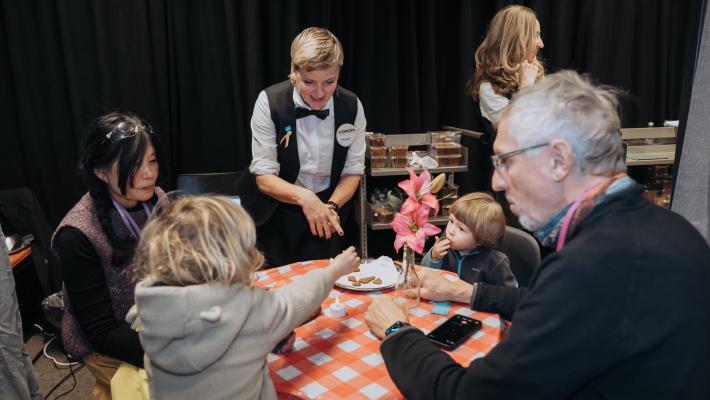
You might have seen it on the VRT news: our mini-restaurants serving ... insect cookies. Such cookies don't appear on the dinner table every day, but during Science Day, several hundred children and their parents eagerly tried algae-based or insect-based cookies. A sustainable and nutritious alternative. Even rector Petra De Sutter, vice-rector Herwig Reynaert, and alderwoman Astrid De Bruycker dared to try. Not everything at the table is always smooth sailing, though. New flavours sometimes trigger parent-child tension. The experiment showed how choices at the table arise from a mix of information (for example, explaining where the food comes from), sensory experience (familiarity, appearance), and context. And that's often not just about you as a parent.
Four restaurants, four mini-experiments
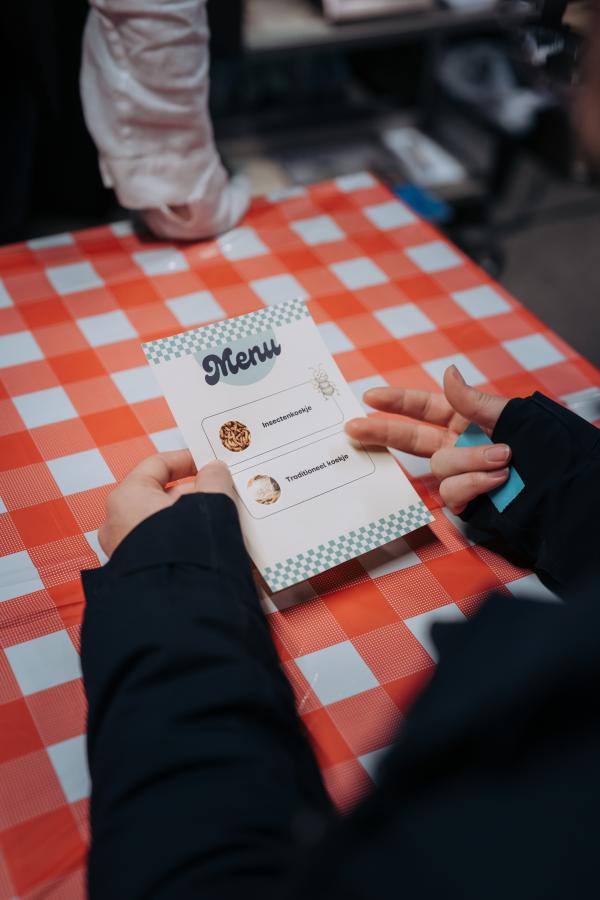
Our "restaurant street" featured four mini-restaurants that together told one story about food choices. At De Proloog, visitors started with a video about algae and insects. Then, they faced the question: would you try an algae- or insect cookie, or stick with a traditional one? At Het Smaakpalet and Van de Kaart, people were served cookies and menus and could choose for themselves. On top of that, they had to decide how much they would pay for the cookies. In Zen & Zoom, parents and children used sensors and a "camera-hat" to explore how emotions, stress, and parental support shape what and how we eat.


Why we eat what we eat: research by the Food Market Research Hub
In the other three mini-restaurants, visitors discovered how the presentation of the cookies influences their choices. Whether you first received some education around sustainable food, tasted immediately without context, or flipped through a menu like in a restaurant, each scenario led to different selections: from traditional cookies to insect-based variants. Thanks to research by Prof. Hans De Steur and Dr. Christien Yung Hunh at the Food Market Research Hub (Ghent University), families saw how order and expectations influence what we pick, and how we view algae and insects as alternative proteins.


Chef Maryam
Browse through the pictures taken on Science Day